|


| |
 
RIO DE JANEIRO
|
Rio de Janeiro
The
state capital, the city of Rio de Janeiro, contains some of the
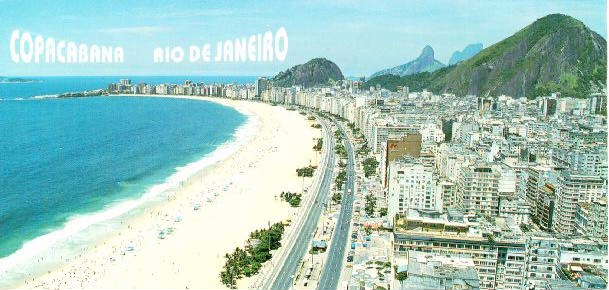
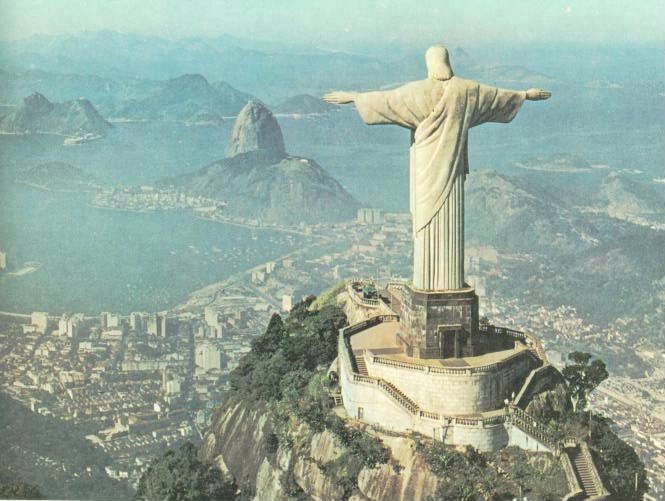
country’s most well-known postcard views, including Copacabana
Beach, Sugarloaf, Corcovado, and the Maracanã soccer stadium. Some
federal government agencies still have their headquarters in the
state, a legacy of the period when Rio was the nation’s capital.
This is true of the State petroleum company, Petrobrás, and sports
federations such as the Brazilian Soccer Federation (CBF). The
economy is based on industry (metallurgy, steel-making, chemicals,
mineral extraction, food products, mechanical goods, publishing
and printing, and paper and cellulose), and tourism. The state is
located in the eastern part of the Southeastern Region and
occupies an area of 43,909.7 sq. kms.
History
Rio
de Janeiro was formed from parts of the captaincies of São Tomé
and São Vicente. Between 1555 and 1567 the territory was taken
over by the French. The city of Rio de Janeiro was founded in
1565.
In
the 17th century cattle and sugar cane generated progress, which
was definitely assured when the port began to export the riches of
Minas Gerais in the 18th century. The city became the capital of
the viceroyalty in 1763. The region benefited greatly from the
transfer of the Portuguese royal family to Brazil in 1808. In 1834
the city of Rio de Janeiro was transformed into a municipality,
remaining the Imperial capital, while the captaincy was made into
a province, with its seat in Niterói. In 1889 the city became the
capital of the Republic, and the province became a state. When the
capital was moved to Brasília in 1960, the municipality of Rio de
Janeiro was turned into the state of Guanabara.
In
1975 the states of Guanabara and Rio de Janeiro were merged to
form the state of Rio de Janeiro, with the city of Rio de Janeiro
as its capital.
|
Location: |
Southeastern Region
|
|
Capital: |
Rio de Janeiro
|
|
Population: |
14,392,106 (IBGE, 2000 Population Census)
|
|
GDP 2001: |
US$ 46.9 billion (R$ 148 billion)
|
|
Per capita GDP: |
US$ 3,220.28 (R$ 10,160.00)
|
|
Number of municipalities: |
92
|
|
Representation in the National Legislature: |
three senators and 46 federal deputies
|
|
Illiteracy rate: |
6.0% (2000 Census)
|
|
Unemployment rate: |
11.6% (IBGE 2002)
|
|
Largest cities: |
Rio de Janeiro (5,857,904), Nova Iguaçu (920,599), São
Gonçalo (891,119), Duque de Caxias (775,456), Niterói
(459,451)
|
|
Vegetation: |
Coastal mangrove swamps, Atlantic Rain Forest, and tropical
forest
|
|
Climate: |
Tropical
|
|
Average annual temperature: |
24°C
|
|
|
|
The Constitution of the new State of Rio de Janeiro, promulgated on July 23rd, 1975,
establishes in its Article 223, that ''the Flag, the hymn, the armor and other symbols of
the State of Rio de Janeiro be the same as of the former State of Rio de Janeiro".
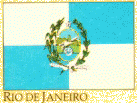
The latest description and interpretation of the Flag of the State of Rio de
Janeiro is the Law No. 5.588 of October 5th, 1965. The Flag is a rectangle divided in four
equal parts, by horizontal and vertical axis. The color of the Flag is celestial blue and
white, alternated. The superior rectangle near the flagpole is white, the inferior blue.
The other side shows the superior rectangle in blue and the inferior in white. In the
center is the armor of the State, the form of which is a cut oval with elements referring
to Geography, Economy and History of the State.
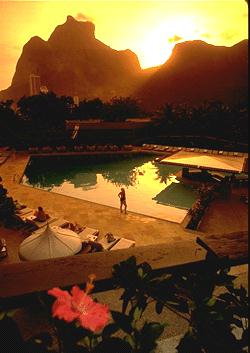
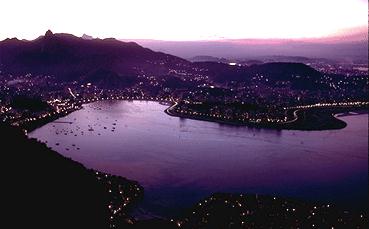
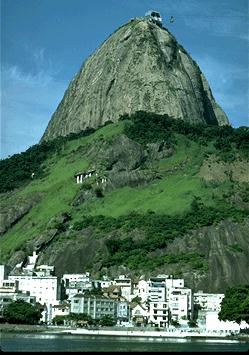
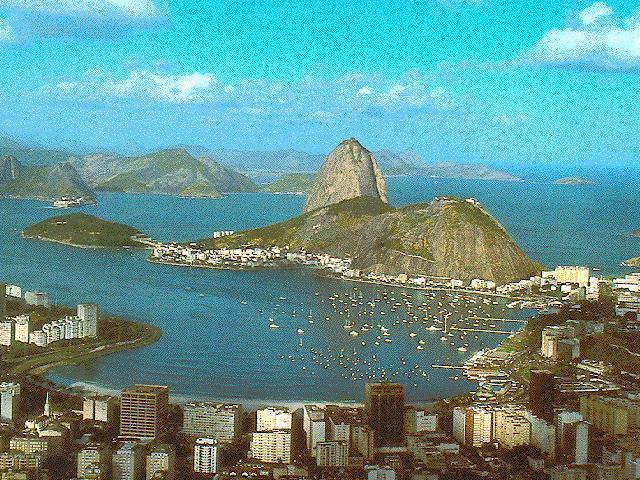
Pictures of the city of Rio de Janeiro...
-
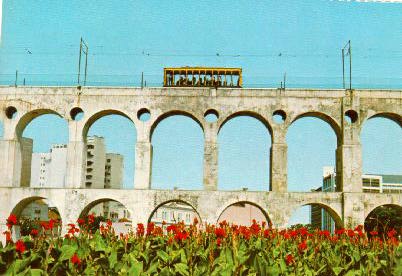
- Arcos (28K)
|
- Copacabana beach (45K)
|
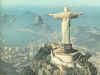
- Cristo Redentor (55K)
|
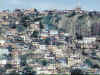
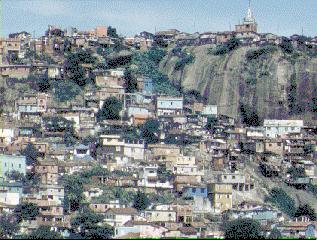
- Favelas (27K)
|
- some hotel (16K)
|
- Enseada do Botafogo(13K)
|
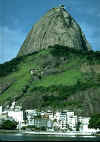
- Pão de Acucar (23K)
|
-
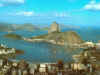
- Rio de Janeiro (104K)
|
-
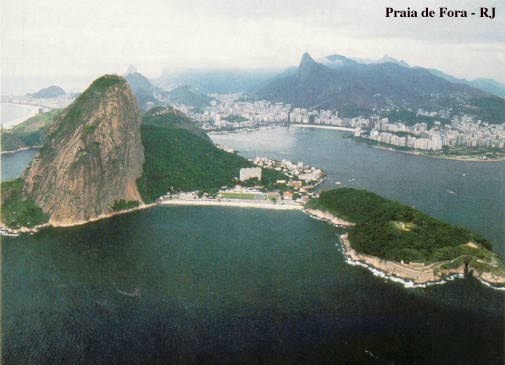
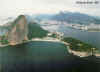
- Praia de Fora (26K)
|
Links to Rio de Janeiro and its cities...
Rio de Janeiro
|